
Great Decisions
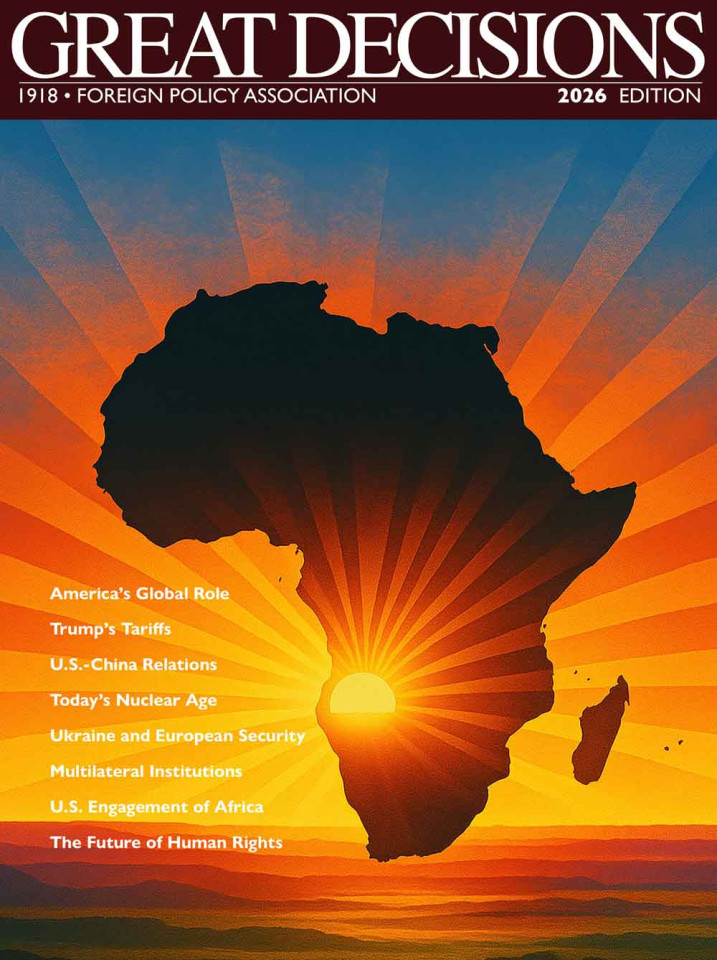
The Great Decisions program is the largest and oldest grassroots discussion program of its kind. It was created in 1954 by the Foreign Policy Association (FPA). Currently 400,000 Americans participate in Great Decisions groups across the country.
FPA publishes a briefing book each year that highlights eight of the most thought-provoking foreign policy issues currently facing our country and the world (see 2025 topics below). The articles, written by experts, provide a concise yet comprehensive overview of each issue, its historical context, the current national debate, and policy options.
Our Great Decisions program runs from late January to mid-May. It is open to WACC members only.
Registration begins in November for the following Spring. We order the briefing books and organize groups of 8-14 people who meet every other week. Members take turns hosting and moderating the discussions. Meeting time, day of the week, and venues for each group are arranged according to group preference.
Complete the Great Decisions Registration Form online and pay the $30 fee (individual or couple) for the briefing book. If you prefer an electronic version of the book, you may order your own (visit FPA website for a list of vendors), but you must still complete and submit the WACC online registration to join a group.
For more information, please contact Susan Bissette at (843) 224-7504.
Great Decisions 2026 Topics
- America and the World: Trump 2.0 Foreign Policy
Trump’s return has marked a break from 80 years of U.S. foreign policy leadership, embracing an “America First” approach. This chapter explores the risks of isolation and diminished influence in relation to Trump 2.0 foreign policy.
By G. John Ikenberry - Trump Tariffs and the Future of the World Economy
Trump’s aggressive trade and tariff policies have shaken global economic norms. What’s the rationale behind this radical shift in economic policy, and what are the implications for multilateral trade and geopolitics?
By Michael Mastanduno - U.S.-China Relations
Relations with China remain tense, with tariffs, military modernization, and pressure on Taiwan. Does Trump have a coherent China policy, and will his tariffs on Rare Earth minerals be effective? What are America’s strategic options?
By Oriana Mastro - Ruptured Alliances and the Risk of Nuclear Proliferation
U.S. alliance skepticism may drive countries like Japan and South Korea to reconsider nuclear options. What are the implications of the Trump administration’s rethinking of the U.S. alliance system for regional and global security? Will this new uncertainty alter the way allies and rivals in various regions make decisions about security and nuclear weapons?
By Gideon Rose - Ukraine and the Future of European Security
With reduced U.S. support for NATO and Ukraine, Europe faces strategic uncertainty. The Trump administration has signaled an intention to reduce its security role in Europe. What are America’s stakes in NATO and Europe’s strategic dilemmas, and how might Europe respond?
By Thomas Wright - Multilateral Institutions in a Changing World Order
Can multilateralism survive amid shifting global power and rising nationalism? This chapter examines the future of global cooperation across trade, health, and finance.
By Scott Bessent (SUBJECT TO CHANGE) - U.S. Engagement of Africa
Africa’s geopolitical role is growing. What lessons can the U.S. learn from China’s presence there, and how might it strengthen ties, especially with leading nations like Nigeria? What tools of statecraft might the U.S. bring to its engagement with Africa?
By Jendayi E. Frazer - The Future of Human Rights and International Law
As democracy and human rights retreat globally—and the U.S. pulls back—how can civil society and legal norms remain effective in a divided world? What is the role and force of international law in this era of impunity?
